.svg)

Aging and Climate Resilience: An Interview with Dr. Alexis Merdjanoff
Key Points
- Dr. Alexis Merdjanoff, a researcher studying climate and aging, identifies what older adults need to age safely in high-risk places.
- Older adults that are embedded in tight-knit communities find it easier to bounce back from extreme weather events.
- Intergenerational dialogue is key to promoting preparedness and climate action.
Key Points
- Research what potential hazards may occur in your community.
- Sign up for your county’s emergency alert system.
- Use the questionnaires below to identify your needs during a disaster.
Tools
- Research what potential hazards may occur in your community.
- Sign up for your county’s emergency alert system.
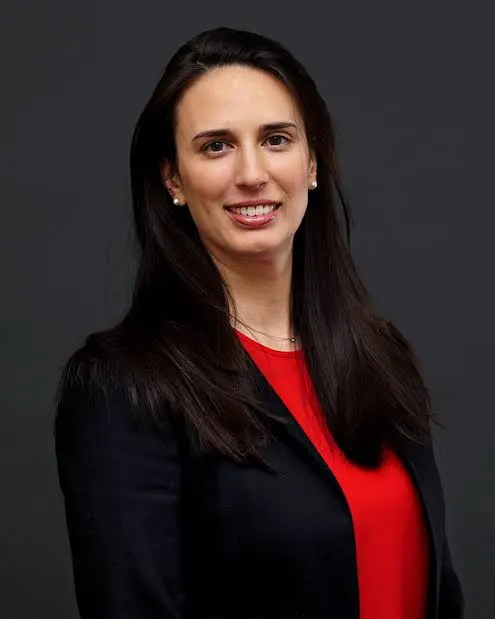
Dr. Alexis Merdjanoff, Director of the Environmental Public Health Program and Assistant Professor of Social and Behavioral Sciences at NYU School of Global Public Health, researches the unique vulnerabilities and impacts older adults face due to climate change. Through countless interviews with older adults in places like New Orleans, Fort Meyers, and more, she has studied the role that community cohesion and connection to place play in climate resilience. We sat down with her to talk about her key takeaways.
Helping older adults age in climate vulnerable locations
Many older adults choose a place to retire without considering climate-related risks. As a result, their routines, hobbies, and communities may end up being rooted in climate-vulnerable locations. Dr. Merdjanoff points out that while some places may be more intrinsically at risk of climate events, the ways that a government and community prepare for and recover from disaster can matter just as much as geography.
While many professionals say people living in climate-vulnerable areas should move out to avoid disaster, a practice known as “managed retreat,” Dr. Merdjandoff advocates for creating community and government-based systems that can promote climate resilience.
“I have heard things similar to, ‘I will go down with this house,’ and to me, if that's the reality that they are staying, even if it's risky, then we need to think about what kind of kinds of resources they need in order to age in place. What I call ‘precarious aging in precarious place,’ ... what do you need, not just from a financial standpoint, but really from a social standpoint, in order to make sure that you can age and continue your independence.”
The role of social support in disaster resilience
In her research, Dr. Merdjandoff found that social ties are a strong predictor for how well older adults can bounce back from an extreme weather event. The people she spoke with leaned on their children and friends to navigate insurance claims, provide a home to stay in while properties were rebuilt, and more.
“Community organizations play a huge role in just daily living, especially for older people, people with families, or lower-income individuals. [They’re] a hub for getting new furniture that was donated or picking up a pair of boots, but also just information hubs, and that's also a piece of resilience. It's not that those things are unique for older adults, everyday people rely on those things for disaster recovery. But they function differently for older adults, and I think understanding that can help us understand how to facilitate older adult recovery following a disaster.”
Financial struggle in disaster
If you live in a disaster-prone area, you’ve likely faced rising homeowners or renters insurance costs. This is particularly difficult for older adults, many of whom live on fixed incomes. Dr. Merdjanoff spoke to older adults that let their insurance lapse rather than pay high premiums, and a few have lost their home to disaster. While no one should have to lose their home, the disruption of such a great loss is felt more deeply in older age, when you may have less resources and capacity to cope with starting over.
“There's a woman that I'll never forget talking to … there's an island off of Fort Myers called Sanibel, [and] this woman had lived there since the 80s, and lived alone … she could not afford the homeowner's insurance anymore, so she was rolling the dice. [She] completely lost her home and couldn't afford to rebuild it …. She said the hardest part was that she had friends there who were able to have homeowners insurance or had savings [and] were able to rebuild, and they're talking about, ‘oh, I just got my new door, my windows came in,’ and she's like, ‘I want to be happy for them, but I don't have that anymore.’ And the disruption that has to somebody's ability to almost grow older in peace. It's like you've made this decision, this is how you envision you're living out your latter stages of your life, and it is completely blown up, right?”
Despite the hardships older adults may face in disaster, Dr. Merdjanoff stresses the importance of intergenerational dialogue around climate change and disaster resilience. Some of her latest research focuses on how working across age can promote climate knowledge and self-efficacy. Her work has inspired us to continue looking for social solutions to social problems, listening to people on the ground and making concrete differences one conversation at a time.